
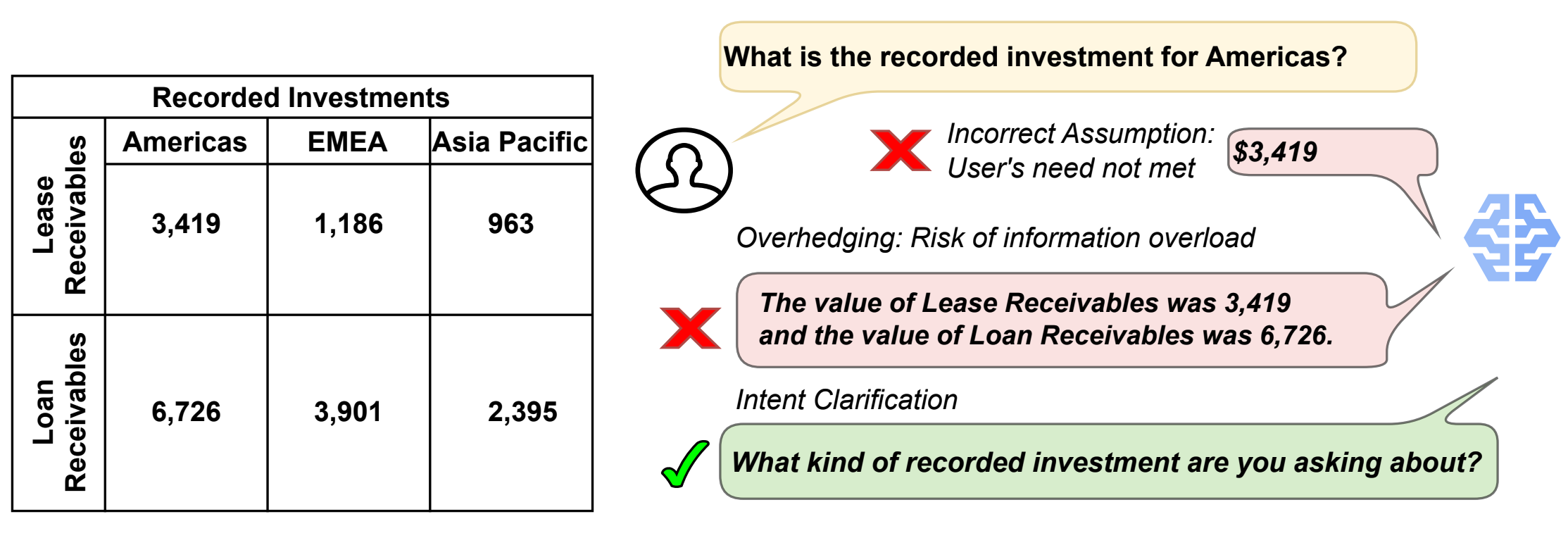
Clarifying Conversations: AI’s New Multi-Turn Approach
Google Research introduces a novel approach to enhancing multi-turn conversations using generative AI. Their method, Action-Based Contrastive Self-Training, focuses on improving the clarity and coherence of AI responses within a dialogue. The core idea revolves around training the AI model to distinguish between helpful, clarifying actions and unhelpful, ambiguous ones. This is achieved through a contrastive learning framework where the model learns to differentiate between positive (helpful clarification) and negative (unhelpful or irrelevant responses) examples. The benefits of this method include more natural and informative conversations, leading to improved user experience. The AI learns to proactively seek clarification when needed and provide more precise answers, reducing the risk of misunderstandings and frustration. While the research doesn’t explicitly detail specific risks, potential drawbacks could include the computational cost associated with contrastive learning and the challenge of defining and labeling ‘helpful’ actions across diverse conversation contexts. The approach is applicable to various conversational AI applications, enhancing its ability to manage complex dialogues. The blog post highlights the significance of the model’s ability to adapt to different conversational situations, demonstrating its robustness and versatility. No specific examples of real-world applications are explicitly given in the provided excerpt; however, the implications suggest improvements in virtual assistants, chatbots, and other interactive AI systems. The Action-Based Contrastive Self-Training framework represents a significant advancement in enabling AI to learn to clarify and improve multi-turn conversations, making interactions smoother and more efficient.